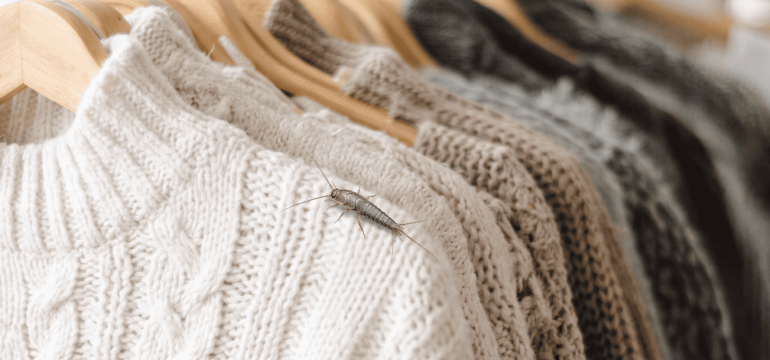

As the cold winter weather settles across South Africa, families are pulling out their heaviest woollen coats, warm winter jerseys, and knits. You might have recently splurged on a cashmere jersey, an investment piece to keep you warm, but now you are paranoid that silverfish (commonly known in South Africa as fishmoths) might start munching into it.
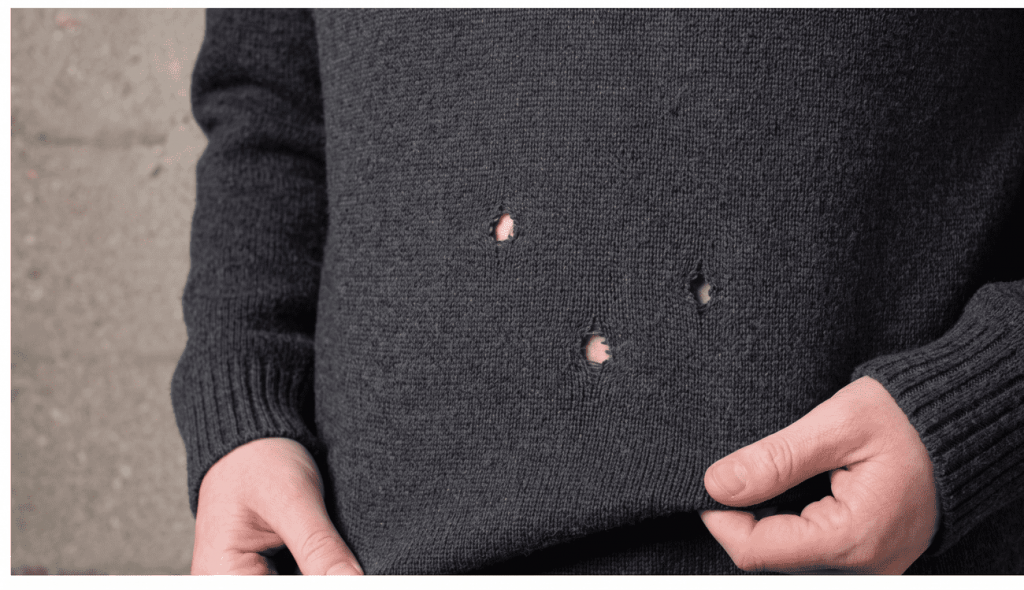
Why worry about something like this? Because we have all been there. You unearth your favourite knit on a chilly winter morning, only to find it has been attacked, leaving tiny, frayed holes.
As pest control specialists, our primary principle is to protect families and ensure their homes and valuable contents are safe from damage. Before you mourn your favourite winter coat, it is worth taking a closer look at your cupboards. If silverfish have made their way inside, they could be feasting on your clothes right now without you even knowing it.
What We Cover in This Article:
- What are silverfish?
- How they live and grow
- Why they love damp winter homes
- Do silverfish actually eat clothes?
- Silverfish vs clothes moths: identifying the culprit
- Damage beyond the wardrobe: paper, books, and pantries
- Why supermarket aerosols fail to solve silverfish problems
- 5 simple tips to protect your clothes
- How to get rid of a silverfish infestation
What Are Silverfish?
Silverfish (Lepisma saccharina), widely known in South Africa as fishmoths, get their name from their shiny silver-blue colour and fish-like wriggling movement. According to the Animal Diversity Web, these wingless insects belong to an ancient lineage characterised by their metallic scales and preference for humid microclimates. Even though they are completely wingless, South Africans often call them fishmoths because of the powdery, scale-like dust they leave behind when crushed.
Signs You May Have Silverfish
- Irregular clothing damage: Small, frayed holes scraped into natural fabrics, bookbindings, or wallpaper.
- Yellowish staining: Faint, irregular patches left on light garments, linens, and paper goods.
- Pepper-like droppings: Minute black specks left along skirting boards, shelf edges, and cupboard corners.
- Shed skins: Translucent, hollow husks left behind in dark corners as nymphs moult and grow.
- Nighttime sightings: Wriggling insects darting for cover in dark wardrobes, bathrooms, or sculleries when a light is turned on.
How They Live and Grow
Adult silverfish are usually between 12 mm and 19 mm long, with flat, carrot-shaped bodies, two long antennae at the front, and three little tail bristles at the back. They are thigmotactic insects, meaning they prefer tight, enclosed gaps where their bodies can make contact with surrounding surfaces on all sides.
Unlike flies or true clothes moths, silverfish do not go through a caterpillar or cocoon stage. When they hatch from their eggs, they look like miniature adults and simply grow bigger over time by shedding their exoskeleton (moulting).
A single female can lay up to 20 eggs a day in dark cracks and skirting boards, and their life cycle is surprisingly resilient:
- Telltale shed skins: As silverfish grow, they leave behind translucent, hollow husks in dark corners and between folded clothes.
- Continuous moulting: Unlike most insects, they keep shedding their skin even as adults. In fact, University of Florida entomological research highlights that these resilient pests can survive for up to a full year without food.
- Egg incubation: Eggs take anywhere from 20 to 40 days to hatch, depending on warmth and ambient moisture.
- Lifespan: They live surprisingly long lives for household bugs, surviving anywhere from two to eight years.
Why They Love Damp Winter Homes
Silverfish need moisture to survive. They thrive best in places where the relative humidity (RH) is high, ideally between 75% and 90% RH. Because they lose water quickly through their thin cuticles in dry air, they hide in dark, humid spots during the day.
During a South African winter, when families keep doors and windows closed to keep the cold out, steam from baths and cooking gets trapped inside built-in cupboards. This creates an ideal, humid microclimate for silverfish to flourish.
Common indoor harbourages (hiding spots) include:
- Unventilated wardrobes and built-in cupboards.
- Bathrooms, laundries, and dark spaces under kitchen sinks.
- Basements, roof voids, and subfloor areas
- Gaps behind loose wallpaper, hollow skirting boards, and floorboard cracks
If indoor room humidity drops below 50% RH, adult fishmoth activity slows down significantly, and young nymphs struggle to survive.
How Silverfish Take in Water
Unlike most household pests, silverfish rarely drink standing water. Instead, they extract moisture directly from humid air. Through a unique physiological structure in their hindgut, they rhythmically contract abdominal muscles to draw air inside and use concentrated salt pumps to pull water vapour straight out of the atmosphere. If indoor humidity drops below 50% RH, this mechanism fails, causing nymphs to dehydrate and adult activity to stall.
Do Silverfish Actually Eat Clothes?
Silverfish are not directly harmful to people or pets, but they can be destructive to your property. They do not actually eat fabric for the material itself. Instead, they are attracted to the starches, sugars, and proteins left on or inside the fabric.
What Attracts Them to Garments
Silverfish use scraping mouthparts to feed on items high in starch and complex carbohydrates (cellulose). When it comes to your clothing, they show a strong preference for natural fibres like cotton, linen, silk, leather, and rayon.
They target stored winter clothes for three main reasons:
- Natural carbohydrates: Natural materials like cotton and linen contain plant cellulose, which silverfish digest easily.
- Laundry starches: Clothes that were starched before ironing or storing give them an accessible source of carbohydrates.
- Food spills and body oils: Garments stored with invisible food residue, sugary drink spills, sweat, or skin oils act as a magnet for hungry silverfish.
When silverfish scrape away at your clothes, they leave behind irregular, frayed holes, faint yellow stains, and tiny black droppings that look like small grains of pepper.
Silverfish vs Clothes Moths: Identifying the Culprit
Not all holes in your winter clothes are caused by silverfish. True clothes moths (Tineola bisselliella) are a completely different pest, and identifying which insect is in your wardrobe dictates how you manage them.
| Feature | Silverfish / Fishmoths (Lepisma saccharina) | Clothes Moths (Tineola bisselliella) |
| Appearance | Wingless, silver-grey, wriggling body | Small, straw-coloured flying moths |
| Target Fabrics | Cotton, linen, rayon, starched items, or wool if stained | Pure wool, cashmere, silk, feathers, and fur |
| Damage Type | Surface scraping, irregular frayed holes | Clean-cut holes chewed through fibres |
| Signs Left Behind | Yellow stains, pepper-like droppings | Silky webbing tubes, granular frass |
Damage Beyond the Wardrobe: Paper, Books, and Pantries
While damaged clothing is usually the first sign of an infestation, silverfish do not limit themselves to built-in cupboards. Because they feed aggressively on starch and cellulose, an uncontrolled population presents risks across other areas of your home:
- Documents and archives: Important legal paper documents, cardboard filing boxes, family photo albums, and bookbindings are prime targets because silverfish feed on the starch-based glues and gelatin coatings used in paper manufacturing.
- Pantry supplies: Unsealed dry goods such as flour, oats, pasta boxes, and sugar packets can become contaminated by crawling insects, shed skins, and droppings.
- Allergies and dust mites: Accumulated silverfish husks, scales, and droppings break down into fine dust, which can trigger respiratory allergies or feed household dust mite populations.
Why Supermarket Aerosols Fail to Solve Silverfish Problems
When homeowners spot a silverfish in the wardrobe, the initial instinct is usually to purchase an over-the-counter insecticide spray from the supermarket. However, relying on consumer aerosols rarely resolves an active infestation.
The Scattering Effect
Most consumer aerosol sprays contain fast-acting synthetic pyrethroids. While these chemicals might kill the single insect you see on the wall, they act as strong repellents to the rest of the harbourage. Sprayed into a wardrobe, the aerosol flushes adult silverfish deeper into wall cavities, roof voids, and adjacent rooms, spreading the infestation further across your property.
Egg Resilience
Over-the-counter surface sprays do not penetrate the protective outer casing (chorion layer) of silverfish eggs hidden deep inside dark skirting board cracks. Even if you eliminate a few crawling adults on open surfaces, new nymphs hatch unharmed 20 to 40 days later, continuing the lifecycle.
5 Simple Tips to Protect Your Clothes
Preventing damage comes down to removing moisture, keeping cupboards clean, and creating physical barriers before packing items away:
- Wash clothes before storing: Always launder or dry-clean garments before packing them away. Removing sweat, body oils, and food spills eliminates their main food source.
- Use airtight plastic containers: Avoid cardboard boxes or wooden trunks. Cardboard uses starch-based glues that silverfish love to eat. Use sealed plastic tubs or vacuum-seal bags instead.
- Use natural scent deterrents: Essential oils like lavender and cedarwood act as natural repellents. Place scented sachets, dried lemon peels, mint, or rosemary in your cupboards to keep silverfish away.
- Lower indoor humidity: Use a dehumidifier in damp rooms, air out wardrobes on clear days, and fix any leaking pipes near cupboards to keep moisture below 50% RH.
- Vacuum cupboards regularly: Clean along skirting board edges, dark shelf corners, and floor cracks at least twice a year to remove dust, hair, and hidden eggs.
How to Get Rid of a Silverfish Infestation
If you already have silverfish active in your wardrobe, simple housekeeping alone might not be enough to reach their hidden nesting spots.
1. Homemade Glass Jar Trap
You can make a simple trap using a glass jar, masking tape, and a piece of bread. Wrap the outside of the glass jar with masking tape so the bugs have traction to climb up, then put a small piece of bread inside. Silverfish will climb in for the food, but once inside, they cannot climb back up the smooth inner glass.
2. Professional Pest Control Treatment
While DIY traps and off-the-shelf sprays might catch a few stragglers, severe or recurring infestations require professional treatment.
Professional pest management relies on Integrated Pest Management (IPM) principles to eliminate both adult insects and their breeding sites safely:
- Targeted crack-and-crevice treatments: Technicians apply safe, long-lasting micro-encapsulated formulations right into skirting boards, wall gaps, and dark cracks where silverfish harbour during the day.
- Breeding-cycle blockers (IGRs): Professionals use specialised Insect Growth Regulators (IGRs) that prevent young silverfish nymphs from successfully shedding their skin, stopping them from maturing into breeding adults.
- Protective void dusting: Applying specialised desiccant dust into roof spaces, subfloor areas, and wall cavities naturally dehydrates silverfish in hidden nesting spots where wet sprays cannot reach
Protect Your Home and Wardrobe Today!
Don’t let silverfish ruin your valuable winter clothes, family records, and home furnishings. If you suspect silverfish are active in your cupboards, contact our expert team to schedule a professional pest inspection.