
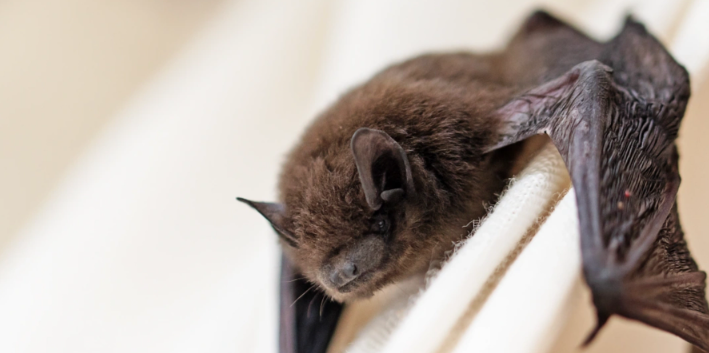

Are bats in South Africa dangerous? It’s a common concern for homeowners who hear rustling in their roofs or spot dark shapes darting past at dusk.
The short answer is no. Bats do not attack humans, hunt for blood, or act aggressively. Native species serve as vital pest controllers that actively keep bug populations down. However, while bats themselves are non-aggressive, letting an active colony settle in your roof space can lead to serious health hazards, structural damage, and legal complications. Balancing bat protection with home maintenance is key to managing them safely.
Disclaimer:
Under South African environmental law, all native bat species are strictly protected.
Rentokil does not handle, trap, remove, or control bats. This article is for homeowner safety guidance only.
Debunking Common Safety Concerns
Most fear around bats comes from urban legends. Here is the reality behind the most common safety questions:
- Do bats attack humans or eat hair?
No. Bats have zero interest in humans and actively avoid you. The belief that bats fly into your hair or attack people is a myth. Bats have keen eyesight and use echolocation to easily dodge objects as thin as a thread while flying. - Do bats bite?
Bats only bite in self-defence if they are trapped, cornered, or directly handled bare-handed. They are naturally timid mammals that will always choose to fly away rather than fight. - Do fruit bats or house bats bite people?
Neither fruit bats nor insect-eating bats (like the common Cape House Bat) bite humans unprovoked. Fruit bats use their teeth strictly for gripping and eating fruit, while insectivorous bats use theirs to crunch through beetle shells and mosquitoes. - Do bats in South Africa carry rabies?
Yes, but it is extremely rare. While bats in South Africa can carry rabies-like viruses (Lyssaviruses), less than 1% of wild bats actually have the virus. Because these viruses are transmitted through bites or scratches, the risk to humans is near zero, as long as you never handle a bat bare-handed. If you are ever bitten, scratched, or come into direct contact with a bat, wash the area with soap and water immediately and seek urgent medical treatment for post-exposure prophylaxis (PEP).
Why Outdoor Bats Are Beneficial for Your Garden
Rather than being dangerous pests, outdoor bats provide free, highly efficient biological insect control around your yard, garden, and braai area:
- Massive Mosquito Control: A single insectivorous bat can eat between 600 and 1,000 mosquitoes and night-flying bugs every single hour.
- Chemical-Free Yard Protection: By preying on nocturnal pests, bats naturally lower insect populations around your outdoor living spaces without the need for heavy chemical sprays.
Risks of Bat Droppings in Your Roof Space
While bats are beneficial outdoors, an active roosting colony inside your ceiling cavity creates health, structural, and secondary pest risks for your home:
1. Health Risks & Histoplasmosis
Accumulated bat droppings create a breeding ground for Histoplasma fungal spores, which cause the serious respiratory infection Histoplasmosis (African Histoplasmosis).
- Airborne Spores: Disturbing or sweeping dry bat droppings releases microscopic fungal spores into the air. Inhaling these spores can cause severe chest infections and flu-like illness, particularly in children, the elderly, or immunocompromised individuals.
- Never Use a Standard Vacuum: Never sweep or use a domestic vacuum cleaner in a contaminated ceiling space. Standard vacuums blow micro-spores directly through the exhaust filter, circulating them straight into living areas through ceiling vents, downlights, and cornices.
2. Structural & Property Damage
- Ceiling Board Failure: Bat droppings accumulate surprisingly fast. The heavy weight of damp droppings eventually warps, rots, or breaks through standard Rhino board, plasterboard, and ceiling panels.
- Acidic Staining & Ammonia Odours: Bat urine is high in uric acid, which corrodes building materials and leaves unsightly dark stains on ceilings. Combined with bat droppings, it creates a pungent, lingering ammonia stench that penetrates walls and living areas.
- Ruined Roof Insulation: Droppings soak into cellulose fibre, fiberglass, and ceiling insulation roll, permanently destroying its thermal efficiency and creating an unsanitary hazard that requires full removal and replacement.
3. Secondary Pest Infestations
- Bat Parasites: Roosting bats carry parasites such as bat soft ticks (Argasidae), bat mites, and related bug species. If the bat colony is excluded or leaves, these starving parasites move downward through ceiling cracks into living spaces to bite humans and pets.
- Insect Attractant: Accumulations of organic bat waste draw unwanted secondary pests into your roof, including cockroaches, carpet beetles, and blowflies.
Bats in the Roof: What South African Law Says
Standard pest extermination methods like trapping, spraying, or poisoning cannot be used under any circumstances. South African environmental regulations protect all native bat species, requiring humane, non-lethal management. You can learn more about managing these situations by reading the Bats KZN conflict resolution guidelines.
South African environmental regulations protect all native bat species:
- It is illegal to harm or kill bats: You cannot forcefully trap, poison, kill, or block the entry points of an active bat roost.
- Empty roosts retain protection: Bats are loyal to their roosting sites and return year after year. Even if bats temporarily leave your roof for the season, legally sealing or destroying the roost is prohibited.
Seasonal Exclusion Restrictions
Legal, humane exclusion (using one-way valves so bats can exit but not re-enter) is subject to strict seasonal restrictions:
- Maternity Season (Late Spring to Early Autumn / Summer) :
Exclusion is strictly prohibited during breeding months. Flightless bat pups remain in the roost while mothers forage outside. Sealing entry points during this window traps baby bats inside to starve and leaves mothers locked out, creating major legal and sanitary issues. - Winter Torpor:
Exclusion or roost disturbance is prohibited during winter when bats enter torpor (a state of lethargy). Sluggish bats cannot navigate exclusion devices and become trapped.
Note: If you need to perform urgent roof repairs or address structural risks where bats are present, you must consult recognized bat conservation groups or licensed wildlife specialists first.
What to Do If a Bat Gets Inside Your House
If a bat accidentally flies through an open window or door, it is not attacking; it is lost and trying to find an exit.
How to Safely Escort an Indoor Bat Out
- Isolate the space: Close internal doors to confine the bat to a single room.
- Darken the interior: Turn off interior room lights.
- Create an exit path: Open all exterior windows and doors in that room, and turn on an outside porch light.
- Let echolocation work: The bat will use its biological sonar to navigate toward the dark opening and exit safely.
How to Handle a Grounded Bat
Never touch a bat with bare hands. Drape a dry towel or dishcloth over the bat, pick it up gently, and set it on an elevated outdoor surface like a high patio table. Bats cannot launch easily from flat ground and need height to take flight.
If the Bat Is Injured
Gently place the towel-covered bat inside a cardboard box with small ventilation holes. Keep it in a quiet, dark spot away from pets and kids, and contact a wildlife rescue organisation.
Emergency Wildlife Contacts
If you need specialised bat rescue assistance or guidance in South Africa, contact local wildlife experts:
- Rewild Bat Rehabilitation Centre: 082 457 7297
- Friends of Free Wildlife: 076 059 3211
- The Bat Interest Group of KZN: 082 445 0585
- Wild and Free Wildlife Rehabilitation: 079 988 5748

Leave a Reply
You must be logged in to post a comment.