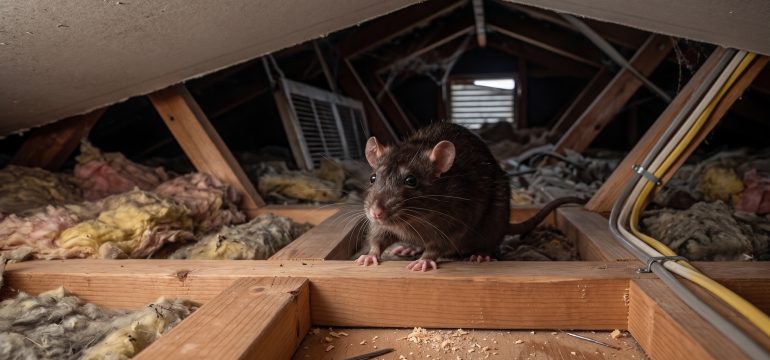

Discovering evidence of rats in your home or hearing scratching noises in your ceiling space can be deeply frustrating. Roof rats are exceptional climbers, using boundary walls, overhanging tree branches, and drainpipes to access rooflines and enter attic cavities through loose tiles, fascia gaps, or unsealed vents.
Once established inside a ceiling cavity, rodents compromise thermal insulation and gnaw through critical electrical wiring, solar connections, and plumbing.
Here is how to identify early warning signs in your roof and home, why common DIY repellents fail, and how professional proofing solves the problem permanently.
Early Signs of Rats in the Ceiling
Because rats are nocturnal and stay hidden during daylight hours, you will usually notice structural evidence long before you spot an actual animal. Identifying these early warning signs allows you to act before a minor roof issue turns into a severe infestation.
Here are the primary indicators of rodent activity in your ceiling or house:
- Unusual Noises at Night: Hearing scratching, scurrying, or thumping sounds coming from your ceiling, subfloors, or drywalls at night is the most common sign of roof rat activity.
- Droppings: Finding small dark droppings in enclosed areas such as pantries, under kitchen sinks, or near roof access hatches is a clear indicator. Rat droppings are sausage shaped and roughly 1 to 2 cm long, whereas mouse droppings are much smaller, thin, and spindle shaped at approximately 5 mm long.
- Distinct Ammonia Smell: Rodents leave behind a sharp ammonia odor from their urine. This scent becomes particularly strong and persistent in enclosed roof cavities, attic spaces, and built in cupboards.
- Gnaw Marks and Cable Damage: Rodents chew constantly to wear down their teeth. In South African ceiling spaces, roof rats frequently gnaw through timber trusses, plastic geyser piping, solar wiring, and distribution board cables, creating dangerous short circuits.
- Greasy Rub Marks: Rodents have oily dirt on their fur. As they travel repeatedly along the same ceiling beams, cornices, and skirting boards, they leave dark greasy smudge marks behind.
Why DIY Repellents and Off-the-Shelf Traps Fail
When homeowners hear noises in the roof, reaching for quick off the shelf fixes is common. However, home remedies fail to address an established nesting population inside a ceiling cavity.
- Mothballs: Mothballs contain far too little naphthalene to deter wild rodents. Rats easily bypass or push mothballs aside, and even if an aroma is strong near a nest entrance, the rodents simply move to another area of your roof space.
- Peppermint Oil: Essential oil aromas naturally rise, while rodents move along floor lines, ceiling joists, and inside wall cavities. Peppermint oil evaporates quickly and provides no physical barrier against determined animals.
- Ultrasonic Sound Devices: Plug in sound devices may cause minor initial confusion, but rodents quickly adapt to background noise or relocate to untreated rooms and ceiling corners.
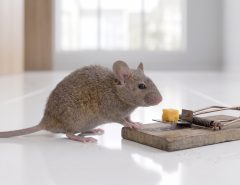
- Standard Ground Traps: Basic traps placed on the floor do nothing to solve an active nest overhead. Roof rats are athletic climbers that can leap up to 77 cm vertically and over a metre horizontally, easily bypassing basic ground barriers.
What to Do When You Spot a Rodent Indoors
If a rat manages to enter your living area from the ceiling space, taking immediate action is natural. However, because rodents are social animals, an indoor sighting almost always indicates a larger nesting population in the roof or wall cavities.
- Isolate Food Sources: Immediately move open pantry items, cereal boxes, and pet kibble into sealed glass, metal, or heavy plastic containers.
- Identify Indoor Access Points: Check behind kitchen appliances, under sinks, and around ceiling trapdoors to see where the rodent entered your living quarters.
- Avoid Direct Handling: Never attempt to catch or corner a wild rodent with bare hands. Wild animals bite when threatened, which can transmit bacterial infections.
- Avoid Uncontained Indoor Trapping: Simple sticky pads or unanchored snap traps placed indoors do not resolve the primary roof nest and leave attractants exposed. Focus instead on securing your food supply while arranging for structural roof exclusion.
Stopping the Root Cause with Professional Proofing
Catching an individual rodent does not seal the unsealed pipe penetrations, missing airbrick mesh, or damaged roof tiles that allowed them inside in the first place. If you are dealing with an established nest or persistent activity in your ceiling, booking a professional rat removal inspection is the most effective way to protect your property long-term.
At Rentokil, our approach to rodent control centres on humane exclusion and environmental restriction:
- Structural Proofing: Our certified technicians conduct full property audits to identify entry points, sealing roof gaps, vents, and pipe penetrations with specialized mesh and durable barriers like our Flexi-Armour rodent proofing range.
- Denying Access to Food & Shelter: We help you identify environmental attractants so wild rodents naturally choose to stay outside in their natural habitats.
- Targeted Colony Management: For severe or stubborn infestations, we utilize tamper-resistant rat bait stations to safely resolve the issue and prevent long-term damage to your home’s wiring and insulation without exposing pets or children to risk.